
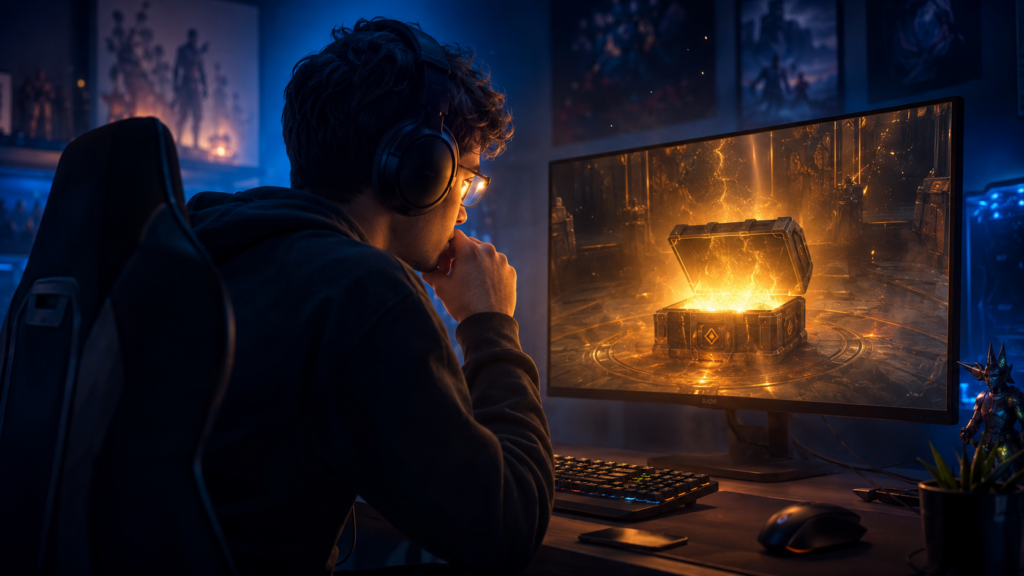
Anyone who has cracked open a loot chest after a brutal final round knows that tiny pause before the result hits. One second you are staring at the screen, the next someone is yelling in voice chat or swearing under their breath. That same buzz is why a spin on wolf pokies feels close to rare drops and crits: it is all about the wait before luck shows its hand.
Why the Wait Hits Harder Than the Win
The pull starts before the reward lands. In a ranked shooter, the final bullet may decide a round; in an RPG, a boss chest may hold a weapon someone has chased all week. The player is already invested before luck enters, so the random result feels personal rather than detached.
That is the difference between a flat coin toss and a rare drop after a rough fight. The coin has no backstory. The raid had missed dodges, clutch heals, bad comms, and maybe one mate swearing at the screen. When the item finally appears, chance borrows weight from everything that happened before it.
Skill Makes Randomness Feel Fair
Gamers usually accept luck when they can see their own hand in the setup. A critical hit feels better after a smart flank, a clean cooldown cycle, or a risky low-health trade. The random number did the last bit, sure, but the player created the doorway. That small distinction keeps the moment from feeling cheap.
Look at loot-heavy games. A top-tier weapon dropping after five lazy minutes would feel hollow, but the same item after a tight boss clear becomes pub talk for days. People remember the failed attempts, the build tweaks, and the one run where the team finally stopped messing around. The drop turns into a receipt for the effort, even when everyone knows the roll itself was never promised.
Where Risk Feels Different Across Games
Not every random moment has the same flavour. A loot chest is slow theatre. A critical hit is instant violence. A last-card draw in a strategy game sits somewhere between the two. The feeling changes because the player’s control changes, and that control decides whether the risk feels thrilling or just annoying.
|
Game moment |
Why players care |
When it feels weak |
|
Rare weapon drop |
The reveal can change the next build |
The fight felt too easy |
|
Critical hit |
One roll can flip a duel |
The setup was sloppy |
|
Loot chest |
Suspense sits in the opening |
The reward pool feels dull |
|
Final-card draw |
Hope lasts until the last second |
The match was already lost |
The comparison matters because gamers can smell fake tension. If a roll feels bolted on, it gets mocked. If it sits inside a tough fight, it becomes part of the story. That is also why online slots feel familiar in this discussion: the reveal matters, but the build-up decides how hard it lands.
The Moment Randomness Turns Sour
The rush gets ugly when a player starts treating chance like a debt. After ten bad drops, the eleventh attempt can feel owed. After three unlucky crit rolls, the next duel feels ready to swing back. Games do not keep emotional ledgers, but tired players often do, especially late at night when one more run sounds harmless.
That slide has a name in most gaming circles, even if nobody defines it formally: tilt. The player stops reading the match, raid, or lobby and starts arguing with the last result. A smart build becomes a stubborn build. A fair risk becomes a grudge. Suddenly the game is not tense; it is just draining. Most players recognise that mood the second voice chat goes quiet.
The Tiny Lie Players Tell Themselves
The sneaky line is, “I am due.” It sounds harmless, almost funny, but it can turn a clean session into a messy one. Rare drops and crits do not remember previous attempts. The player remembers them, though, and that memory can make the next click feel more reasonable than it is.
Final Read on the Rush
The best random moments in competitive games work because they sit beside effort. A clutch crit, a rare weapon, a wild chest pull: none of them means much without the fight around them. Chance gives the spark, skill gives it shape, and players keep coming back for that strange little collision.